The Exteriors Company is a licensed siding contractor based in Madison, installing James Hardie fiber cement, LP SmartSide engineered wood, and vinyl siding across Dane County, from our siding contractors in Madison to crews in Sun Prairie, Middleton and Verona. We pull the old siding back far enough to inspect the sheathing and house wrap on every job, because in this climate the barrier behind the siding matters more than the siding itself.
The Experts You Can Trust







Full re-sides, partial replacement, and the repair work that’s usually hiding behind the old siding.
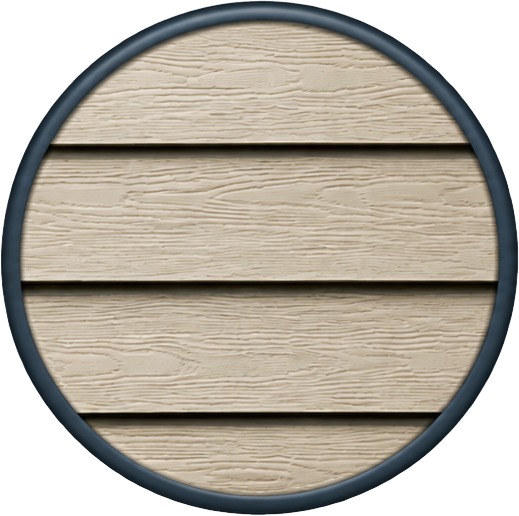
James Hardie lap, shingle, and panel. The most dimensionally stable option for Wisconsin freeze-thaw, installed to Hardie’s fastening and clearance specs so the warranty holds.
LP SmartSide & Diamond Kote lap and panel. Real wood texture, lighter than fiber cement, easier to work on complex elevations, at a lower price point. Learn more about LP SmartSide siding.
CertainTeed, Mastic and Ascend insulated panels. The budget option, and perfectly sound when the wall behind it is detailed correctly, which is where most vinyl jobs go wrong. As vinyl siding installers across Dane County, we detail that wall on every job. The foam backing also helps your heating bill. See how new siding improves energy efficiency.
What we find behind old siding more often than not. We replace soft OSB and rotted framing before new siding goes up, priced transparently.
The layer that actually keeps water out. Proper weather barrier, window and door flashing, and correct lap direction — the part a cheap bid skips.
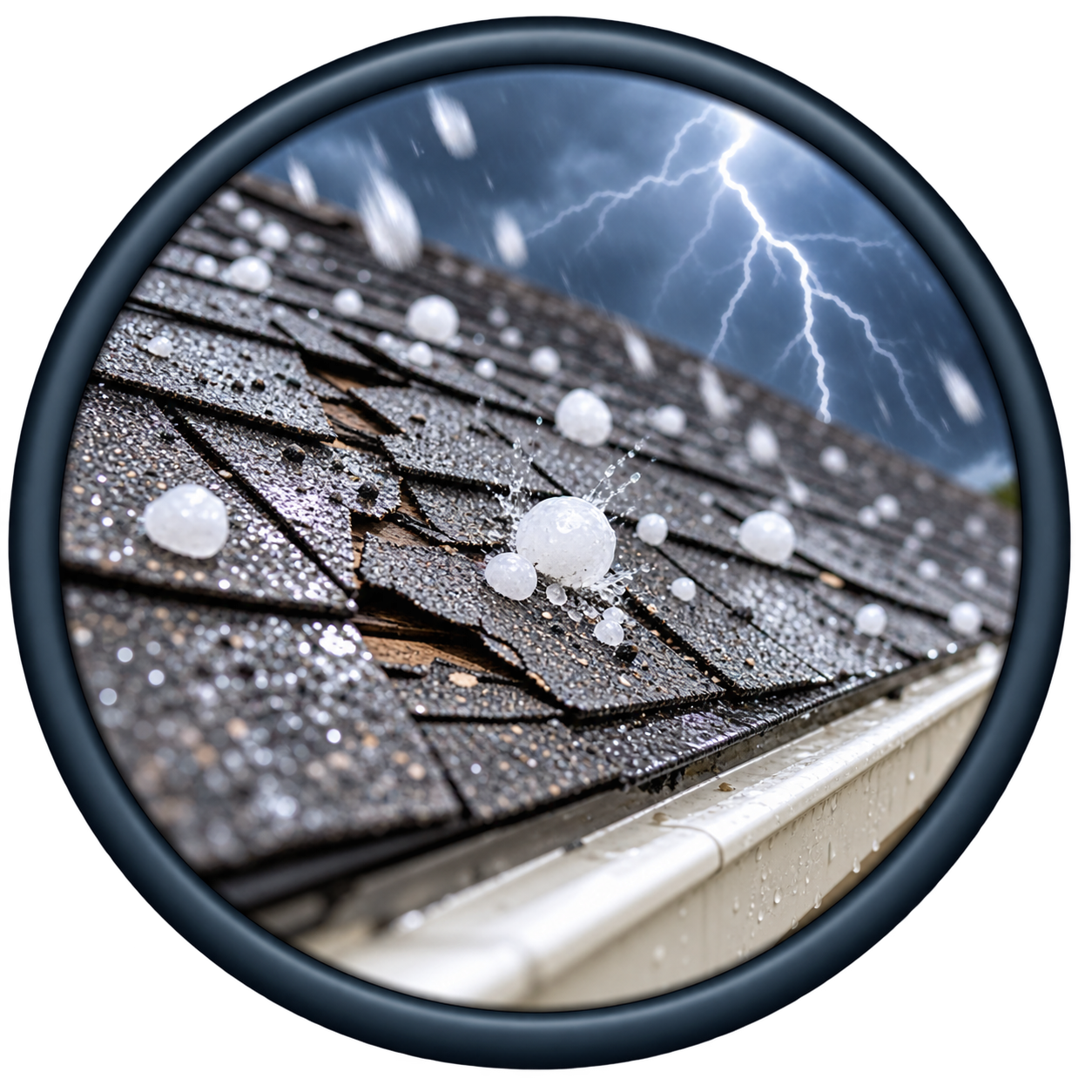
Cracked, holed, or wind-torn siding, documented for your insurer. We handle siding insurance claims from inspection through the adjuster meeting.
Still deciding on a look? Browse popular siding styles and colors before you compare materials.
| Fiber Cement$13–$22 / sq ft | Engineered Wood$11–$18 / sq ft | Vinyl$8–$14 / sq ft | |
|---|---|---|---|
| Service Life | 40–50 years | 30–40 years | 20–30 years |
| Freeze-thaw Stability | Excellent | Very good | Can crack in deep cold |
| Fire Resistance | Non-combustible | Treated wood | Melts / burns |
| Finish | Baked ColorPlus or paint | Pre-finish or paint | Color molded in |
| Repaintable | Yes | Yes | Not really |
| Weight / Install | Heavy, slower | Moderate | Light, fastest |
| Historic District Fit | Usually approved | Often approved | Often rejected |
| Workmanship Warranty | 20 years | 20 years | 20 years |
| Best For | Long-term owners, fire-conscious buyers, historic districts, maximum durability | Complex elevations, wood look at lower cost, faster installs | Budget re-sides, rentals, straightforward ranch and split-level elevations |
Prices are installed, per square foot, and include tear-off and standard house wrap. Sheathing repair, trim, and complex elevations price separately.
Siding Failures Are Moisture
In our experience, most siding we’re called to inspect in Dane County failed because water got behind it — not because the material wore out. Backwards house wrap laps, missing window flashing, and no clearance at grade are the usual culprits. That’s why we quote the wall assembly, not just the siding, and why the cheapest bid is often the one skipping the layer that matters. Here’s more on choosing siding that holds up to Wisconsin storms.
Most siding projects take one to two weeks, weather depending.
We assess the elevations, check for existing moisture damage, and talk through material.
Line-item quote naming siding, wrap, flashing, and trim — with a sheathing repair allowance.
Old siding off, sheathing checked wall by wall. Rot gets replaced before we go further.
House wrap, flashing, then siding to manufacturer spec, one elevation at a time.
Corners, trim, caulk, and cleanup. Every siding job is backed by our 25-year workmanship warranty.
Your local exterior experts
“Roland and Scott did a great job getting me set up with all new siding for my house. They gave me lots of options and helped guide me through the entire process. Taylor was my field manager and he did an outstanding job from the beginning of the project to the end. Very satisfied customer. Highly recommend!”
– Tyler K.
“Exteriors Co replaced my siding after hail damage. They were the only contractors I solicited who took the time to sit down and go over insurance claims with me. They caught items insurance did not include and solicited additional money from my insurance to cover. I was pleased with the interactions and the siding work.”
– Duane H.
“Great experience and service! We worked with the exteriors company to replace our siding, gutters, and roof. They had great communication through the whole process and the final result looks amazing!!”
– Ashley M.
“Don W. Called ahead and Showed up when he said he would. The roof and small siding repair was done in a timely manner. Don was Very easy to talk to and he understood what needed to be fixed. And completed the job as promised.”
– BNPRESERVE
“The highlights were communication, quality of work, price, and customer service. … The Exteriors Company could teach a master class on contractor/customer interactions. If you need exterior work done, call The Exteriors Company!”
– Heather L.
“The crew that was at my house did a great job. I highly recommend the exteriors company. They worked with my schedule and did a great job with clean up after.”
– Katie H.
“The Exteriors Company transformed our home in Madison, WI with a full roof replacement, new siding, soffits and fascia, seamless gutters, a front door replacement and a custom awning over the entry. If you need a roofing and siding contractor in the Madison area, I highly recommend them.”
– Austin S.
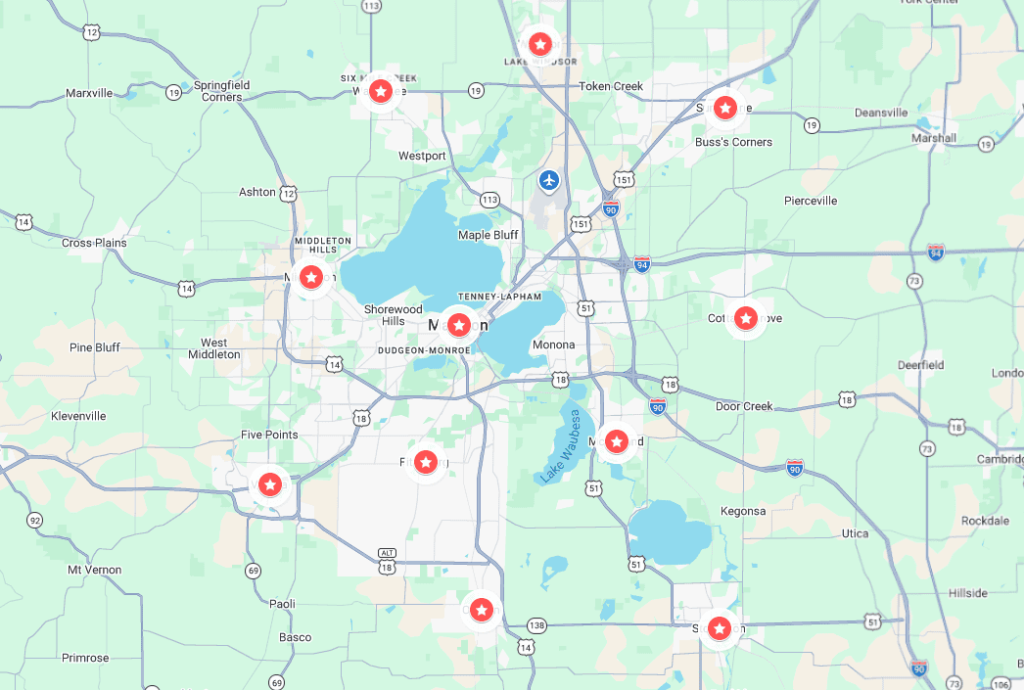
Service area
Don't see your area? No problem! Give us a call - we work with homeowners throughout southern Wisconsin.
Siding Questions
Keep the current answer, then add at the end: Ask about 0% siding financing to spread the cost over a term that fits your budget.
Fiber cement and engineered wood both hold up well to freeze-thaw cycling. Fiber cement is the most dimensionally stable and fire resistant, but heavier and pricier. Engineered wood is lighter, easier on complex elevations, and gives a real wood texture at lower cost. Vinyl is the budget option and performs fine installed correctly. But the honest answer is that material matters less than the water barrier behind it — most siding failures here are moisture problems, not material failures.
Yes. James Hardie makes a climate-specific line engineered for freeze-thaw regions, formulated to resist moisture absorption and cracking through repeated freezing. The catch is that it must be installed to Hardie’s fastening, clearance, and gapping specifications or the warranty is void — which is exactly why installation quality matters more than the name on the label. We install to Hardie spec and register the warranty for you.
Almost always one of two things: water in the sheathing behind the siding, or fasteners driven too tight so the material couldn’t expand and contract with temperature. Both are installation issues, not material defects. Replacing the siding without addressing the wall behind it just resets the clock on the same failure, which is why we pull it back and inspect before quoting a fix.
We strongly advise against it, and usually won’t. Siding over the old layer means you can’t inspect the sheathing, can’t correct the weather barrier or flashing, and can’t fix whatever moisture problem is likely already underway. It hides exactly the things that cause walls to fail. Full tear-off costs more up front and is the only way to know what you’re actually dealing with. Here’s what Madison homes face each year behind the siding.
Most homes take one to two weeks, depending on size, number of stories, and how much sheathing repair turns up once the old siding is off. Historic homes and complex elevations with lots of gables and trim run longer. We give you a real timeline at the estimate rather than a vague window, and we work one elevation at a time so the house is never fully exposed. Gentle cleaning helps too. Here’s how to clean vinyl siding without damaging it.
If your home is in a designated district — Mansion Hill, Third Lake Ridge, University Heights, Marquette Bungalows and others — street-visible material and profile changes go through Landmarks Commission review. Vinyl is often rejected in these districts; fiber cement and engineered wood in matching profiles usually pass. We’ve been through the process and can bring options likely to be approved.
Most vinyl siding lasts 20 to 30 years here. Deep cold makes vinyl more brittle, so impacts in January can crack panels that would flex in July, and installation matters as much as the product: panels nailed too tight can’t expand and contract, and they buckle or crack early. Insulated vinyl panels are more rigid and hold up better than standard thin-gauge vinyl.
For most homes, an insulated vinyl panel from a major manufacturer like CertainTeed, Mastic or Ascend. The foam backing makes panels more rigid, flatter on the wall and more impact-resistant than standard vinyl. The brand matters less than the wall behind it: correct house wrap laps, window flashing and clearance at grade decide whether any vinyl lasts.
Built for Wisconsin · Backed by Expertise
Get your free, no-obligation inspection today.